The Allure of Mediterranean-Inspired Mosaics in Modern Design
Mediterranean-inspired mosaics have a way of making a space feel both ancient and alive. They draw on the region's long history of decorative tile work, from the geometric floors of Roman villas to the intricate wall panels of Moorish palaces. What sets them apart is not just the patterns but the materials and the light. Glass tiles catch the sun in a way that ceramic cannot, and the colors often reflect the sea, the sky, and the earth of southern Europe and North Africa.
When you choose a mosaic for a pool, a kitchen backsplash, or a feature wall, you are making a decision about how the surface will interact with its environment. Mediterranean-inspired mosaics work well in spaces where you want a sense of depth and movement. The small tiles, or tesserae, create a shimmering effect that a single large tile cannot replicate. That is why they have remained popular for thousands of years.
What Makes a Mosaic "Mediterranean-Inspired"
The term covers a broad range of styles. Some designs lean on classical motifs such as wave patterns, meanders, or stylized leaves. Others take inspiration from the organic, flowing forms of Art Nouveau, which itself borrowed from Mediterranean tile traditions. The common thread is a palette that includes deep blues, turquoises, terracotta reds, sandy beiges, and verdant greens.
Materials also matter. Glass tiles offer translucency and a jewel-like quality. Ceramic tiles bring a matte, earthy feel. Many high-end installations mix both. The glass reflects light while the ceramic absorbs it, creating contrast. When you look at a well-made Mediterranean-inspired mosaic, your eye moves across the surface, picking up different tones and reflections depending on the angle of the light.
One studio that has worked with these materials for decades is MEC Artworks. Their portfolio shows how Mediterranean-inspired mosaics mecartworks can be adapted to both traditional and contemporary settings. The key is in the craftsmanship: the way the tesserae are cut and set affects the rhythm of the pattern. A machine-made tile might be perfectly uniform, but a hand-cut piece has slight variations that give the surface life.
Where to Use Mediterranean-Inspired Mosaics
Pools and Water Features
Water and mosaics have a natural affinity. The tiles reflect light through the water, creating patterns that shift as the water moves. Mediterranean-inspired mosaics are especially effective here because their colors echo the sea. A pool lined with blue and green glass tiles can look like a natural lagoon. The trick is to choose a palette that works with the surrounding landscape. If you have a lot of stone and olive trees, earthy tones with hints of blue can tie the whole scene together.
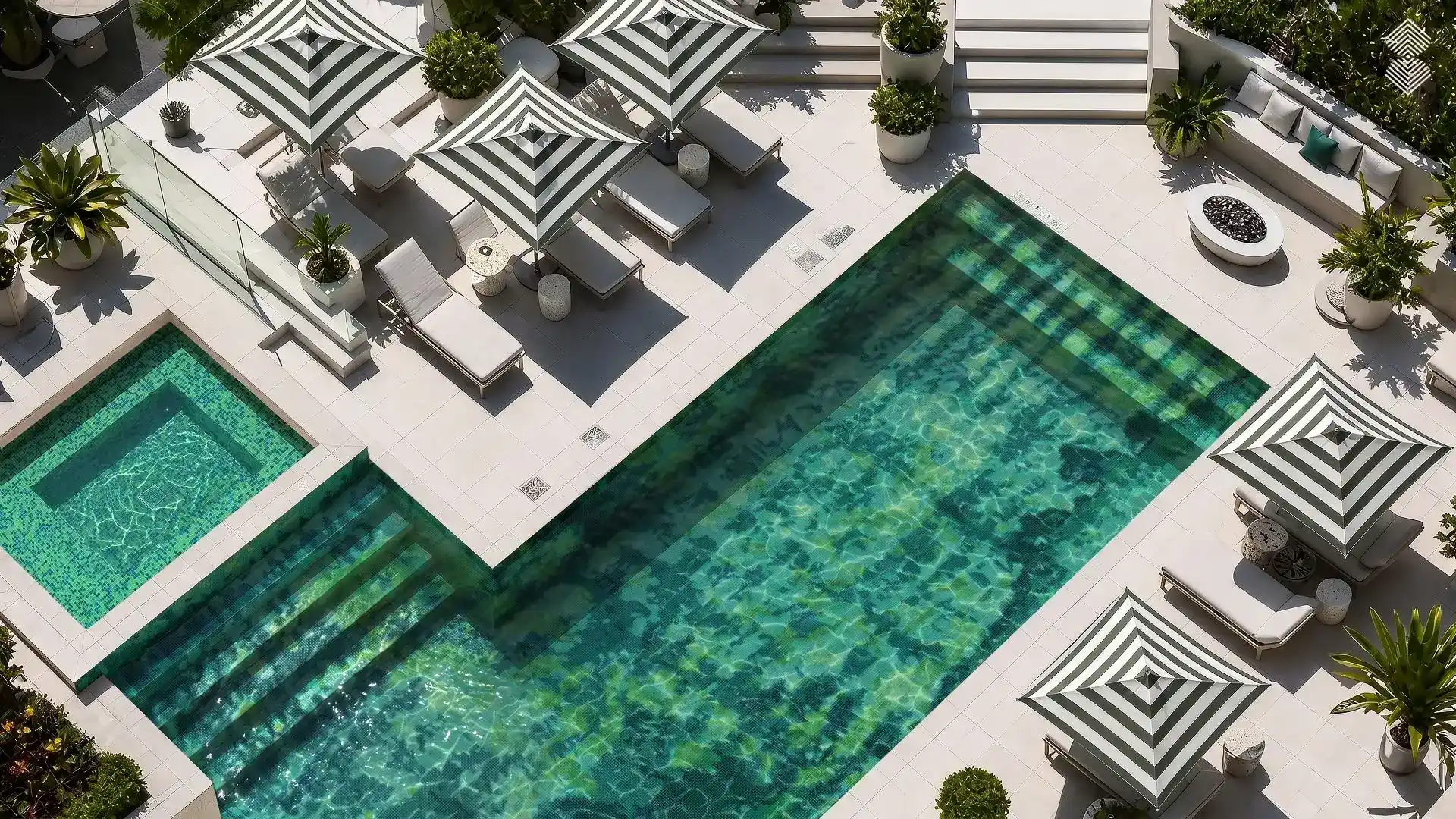
For pool installations, the mortar and grout need to be waterproof and flexible. The tiles themselves should have a low water absorption rate. Glass is ideal because it is non-porous and does not fade in sunlight. Ceramic can work if it is properly glazed, but it is more prone to chipping over time. A professional installer will know how to handle the expansion and contraction that happens with temperature changes.
Kitchen Backsplashes
A backsplash is a small area where you can take risks. Mediterranean-inspired mosaics in a kitchen can turn a utilitarian space into a focal point. You might use a simple geometric pattern behind a stove, or a more elaborate scene of fish and waves if the kitchen has a coastal theme. The challenge is to balance the visual weight. A busy mosaic can overwhelm a small kitchen, so it helps to keep the surrounding cabinets and countertops neutral.
Grout color matters here as well. A light grout will make the pattern pop, but it will also show stains. A darker grout recedes into the background and is easier to maintain. Many homeowners choose a grout that matches one of the secondary colors in the tile, so the overall look remains cohesive.
Feature Walls and Entryways
A feature wall is a chance to make a statement. In an entryway, a Mediterranean-inspired mosaic can set the tone for the whole house. Patterns that radiate from a central point, like a sunburst or a star, draw the eye and create a sense of arrival. The scale of the pattern should match the size of the wall. A small, intricate pattern on a large wall can look busy and fragmented. A larger, bolder pattern holds the space better.
One option is to use a border or a panel rather than covering the entire wall. That gives the eye a place to rest and reduces the cost. Mediterranean-inspired mosaics mecartworks often incorporate borders that frame a simpler field of tiles, which is a technique used in ancient floor designs. It still works today.
Design Considerations and Trade-offs
There is no single right way to design with mosaics. The choice depends on the effect you want. High-contrast patterns create energy and drama. Low-contrast, monochromatic schemes are calming and sophisticated. The same pattern can look completely different in a dark grout versus a light one. It is worth making a sample board before committing to a large area.
Another consideration is the scale of the tiles. Small tiles, such as 1x1 inch squares, allow for very detailed patterns but take longer to install. Larger tiles, like 2x2 inches, work better for simpler designs and are faster to lay. The thickness of the tile also affects the feel. Handmade tiles often have a slight unevenness that adds character, while machine-made tiles are uniform and crisp.
The budget is always a factor. Hand-cut glass tiles are more expensive than standard ceramic, but they offer a depth of color that ceramic cannot match. A mixed approach can save money without sacrificing the overall look. Use the more expensive tiles in the focal area and a complementary but cheaper tile for the rest of the surface.
Maintenance and Longevity
Mosaics are durable, but they need proper care. The grout is usually the weak point. It can crack or stain over time. Sealing the grout after installation helps. For kitchen backsplashes, a penetrating sealer protects against oil and food splashes. For pool mosaics, the grout should be epoxy-based for waterproofing. The tiles themselves, especially glass, are easy to clean with a mild detergent and a soft cloth. Avoid abrasive cleaners that can scratch the surface.
With good installation and maintenance, a mosaic surface can last for decades. That is one of the reasons the Mediterranean style has endured. The ancient mosaics in Pompeii are still vivid after nearly two thousand years. Modern materials are even more resilient.
Bringing the Look Home
If you are planning a project, start by collecting images of mosaics that appeal to you. Look at the colors, the patterns, and the way the tiles are laid. Then think about the room's lighting. Natural light changes throughout the day, and glass tiles will look different at noon than at dusk. Artificial light can be directed to highlight the mosaic's texture.
Work with a designer or a studio that understands the material. MEC Artworks has been doing this for four decades, and their experience shows in the way they handle transitions between colors and materials. When you see a well-executed installation, you notice how the pattern flows around corners and how the grout lines are consistent. That level of craft is what separates a good mosaic from a great one.

Mediterranean-inspired mosaics mecartworks are a way to bring a piece of history into your home while creating something that feels personal and contemporary. The style has survived because it adapts. Whether you want a calm, monochromatic wall or a vibrant, intricate floor, the principles are the same: choose good materials, plan the design carefully, and let the craftsmanship speak for itself.
The best mosaics are the ones that feel inevitable. They look like they have always been there, like the house grew around them. That is the goal. Not to copy the past, but to use the same tools and sensibilities to make something that feels right now. With thoughtful design and skilled installation, Mediterranean-inspired mosaics can transform a space into something memorable.
 Twitter
 Instagram
 YouTube
 Pinterest